
In this article
In this article
If you think filming a Metalsmith Academy class means I just rock up, flick on a camera and start soldering like a serene metalsmithing goddess… I wish.
What actually happens looks more like a crime scene made of coffee cups, silver dust, and a posture last seen in pretzels.
Every bit of that chaos has a purpose though - behind the camera, there’s planning, testing, and more retakes than I’d ever admit.
And everything is scripted to make sure I’m working in a logical order and not wasting anyone's time waffling… all to make sure you can learn without the drama.
So today I thought I’d pull back the curtain and show you what really goes into creating a Metalsmith Academy class, the craft, the caffeine, and the stubborn streak that keeps me doing “just one more take” until it’s perfect.
If you’ve ever watched one of my classes and thought, “She makes it look so easy,” buckle up - because here’s what it actually takes to get it that way.

Where It All Began
Long before the Metalsmith Academy existed, I trained the traditional way: white-walled studios, brilliantly demanding tutors, and benches so spotless you could eat your lunch off them (though you wouldn’t dare). I learned from masters who could spot a crooked solder seam from across the room and make you redo it before you’d even exhaled. There’s nothing like the sound of an expert sighing at your file marks to build character.
That kind of training sticks with you. Once you’ve been taught to measure twice, solder once, and redo it anyway just to be sure, you can never unsee sloppy teaching again. But getting that kind of training wasn’t easy. Those courses cost thousands, demanded months (and even years) away from home, and for me, meant moving countries more than once just to sit at the right bench. It was worth every minute… but not exactly accessible for most people.
So when online jewelry classes started popping up, I was part excited… part skeptical AF.
On one hand, it was brilliant. Finally, people could learn from home, at their own pace, without having to remortgage their house or fly halfway across the world for a few weeks of training. It felt like the start of something big - a way for more people to fall in love with this craft.
But I also couldn’t shake the feeling that jewelry-making was too hands-on, too practical to really work online.
The reality didn’t exactly help either.
Many online teachers were simply teaching as if they were in the room with you, forgetting that online learning is completely different. When you’re not there to answer questions at 1am while someone’s soldering their first ring, you have to think of those questions before they even come up - and make sure every single one is answered inside the class itself.
Instead, there were hands blocking the view, blurry footage, and crucial steps skipped with no explanation of why something worked. You’d see a project appear out of nowhere and think, Hang on… when did we solder that?
So I sat on the idea for a year, and the requests just kept pouring in…
Until one day I realized that when I was teaching in-person classes, I was already using a camera to show the close-up details - the bits people couldn’t actually see, even if they were standing right next to me.
That’s when it clicked.
It wasn’t that jewelry-making couldn’t be taught online… it just needed to be taught differently than in person.
More intentional. More detailed. More thought-through.
Because you’re not just showing someone what to do - you’re guiding them step-by-step, making sure nothing gets missed, and that every stage actually makes sense as they’re doing it.
So that’s how the Metalsmith Academy was born… equal parts passion, and pure stubbornness.
Now, fast forward to today, and every single class you see inside the Academy starts its life the same way, with far too many notebooks, an unreasonable amount of caffeine, and me obsessing over how to make each step feel easy for you.
The Planning You Never See
Before the camera ever switches on, there’s an entire phase of quiet chaos! The first stage of any class happens miles away from the studio, usually at my kitchen table surrounded by sketches, test pieces, and a small mountain of scrap silver that “might come in handy.”
But truth be told? Not all ideas start there.
Some of my best class ideas have come when I’m supposed to be not working… on holiday, at the pub, or mid “I’ll just relax for five minutes.” My brain gets a little less chaotic so I get an idea, it then realises I’m too calm, decides it doesn’t like that one bit, and suddenly - boom - I’m scribbling notes on napkins like a madwoman while everyone else is ordering another round.
Planning isn’t about perfection; it’s about empathy. I picture you at the bench thinking, Hang on, which side was up again? and design the class so that question never pops up.
Sometimes that means binning a perfectly good idea because I realize I haven’t taught enough of the “back up skills” quite yet to make the class a success. After all, showing someone how to do a bead setting before showing them how to sharpen a graver is a recipe for failure. So sometimes that means remaking a project five different ways to find the cleanest path from A to aha.
I’ll spend weeks breaking techniques down into small wins, constantly asking myself, “Would this make sense if I were seeing it for the first time?” (Spoiler: usually, the answer is no… at least the first dozen times.) It’s equal parts logic puzzle… and me stubbornly refusing to let anything slip through the cracks.
There’s a fine line between “thorough” and “utterly unhinged,” and I walk it proudly!
Bench truth: Every smooth, satisfying moment you see in a class started here, with me muttering at a sketchbook and convincing myself that this extra coffee is “for focus.”
When a Class Becomes a Story
Once the plan finally makes sense (and the coffee supply is restocked), it’s scripting time!
Yes, I actually write scripts, but not because I’m chasing perfection or trying to sound clever. It’s because jewelry-making is full of tiny details that can make or break a project. Things that feel second nature once you’ve been doing this for years, like how to hold a file for maximum control, or how to properly support your hands when soldering so the solder goes exactly where you want it, are make-or-break moments for beginners.
When we’re teaching in person and forget to mention something, it’s no big deal, someone will just ask in class. But with online teaching, I have to make sure every single one of those little “oh, by the way” moments is already answered inside the class itself. That’s what the scripting’s for: catching all those invisible details before they trip someone up.
My Getting Started Soldering class ended up at over 50,000 words. That’s not indulgence… that’s insurance! It means you never have to pause and rewind wondering what on earth just happened. (The video editor (me) is still in therapy, but your solder seams are cleaner, so we’ll call it a win.)
I learned early on that the order you teach things in matters just as much as the technique itself. If you tell someone what to do but not what could go wrong, you’re already too late. It’s always better to warn people before they melt the bezel, not after! So I design every lesson like a staircase, each small step leads to the next, and before you know it, you’ve nailed a technique that used to terrify you.
I’ll rewrite the flow over and over until it sounds like I’m right there at your bench, explaining it in plain English (with a few sarcastic comments and minor torch-based trauma along the way).
Bench truth: The secret to great teaching isn’t fancy words or perfect takes, it’s flow. When the story makes sense, your hands follow. (Thank goodness, because I don’t have many fancy words anyway.)
Filming for You, Every Angle, Every Step
Filming is where all that careful planning meets tripod chaos! There are cables everywhere, lights that could tan a vampire, and at least three half-finished projects lying around so I can show you every single stage clearly. (You’d think I was running a small jewelry factory... and honestly, some days it feels that way.)
Getting around the studio turns into its own challenge too - it’s basically one of those laser alarm systems from the movies. You know the scene… Catherine Zeta-Jones weaving in and out of laser beams? That’s me, dodging tripods instead of lasers.
Graceful? Absolutely not.
Covered in “mystery” bruises? Always.
If something blocks the view, I redo it. If the focus slips halfway through a solder seam, I redo it again. My rule’s simple: if you can’t see it, you can’t learn it! And if my best camera angle conks out halfway through filming due to overheating, I’ll never skip that step. I’ll just make the piece again.
It’s a far cry from my early training days in community college when you got one quick demo and then were sent off to “figure it out.” Blink, and you missed the most important bit. Now, I make sure every flame, file, and fiddly little join is caught in glorious detail, no squinting required.
Sure, there are moments when I mutter at the camera, trip over a tripod, or realise halfway through that my hand was covering the join (again). I won’t tell you how many shots have been interrupted by me kicking a cat out of the room for using a tripod as a scratching post. But when that final take is crystal clear (and I know you’ll be able to see exactly what’s happening), it’s magic!
Bench truth: Every clean close-up you see has probably been filmed, refilmed, and followed by a round of high fives between me, Fatima, and Qaralin as we look at each other and say, “OMG that shot couldn’t have gone any better.” Usually followed by a very silly happy dance.
And once all that’s finally captured, the real work begins, turning hours of footage into something that actually flows.
Editing: Turning Hours Into Understanding
Here’s the maths that makes most people blink: for every single hour of finished class, I sift through about twenty hours of footage. (Yes, twenty. My laptop fan deserves its own medal at this point, and I probably have about $6000 worth of hard drives and SD cards.)
Editing is where the chaos turns into clarity. It’s the part where I take all those camera angles, retakes, and accidental “oops” moments and turn them into something that flows so smoothly you’d never know I once dropped my file mid-shot. Afterall, no one wants to sit through five minutes of me waffling while I look for a runaway gemstone or a rogue saw blade.
Every cut is intentional, every close-up chosen to make sure you can actually see what’s going on. If there’s even a second where you’d think, Wait, what did she just do? back I go into the edit to fix it.
When it finally flows from start to finish, it’s like watching a perfect solder seam come together, clean, precise, and quietly satisfying. (And yes, there’s usually a victory dance involved.)
But the work doesn’t stop when the video’s done! Next comes one of the most important parts of the whole process, the handouts.
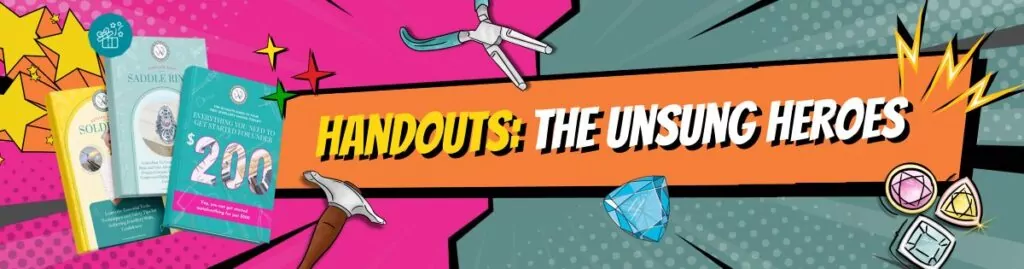
Handouts: The Unsung Heroes
Every class inside the Academy comes with a printable handout, the quiet little hero that saves your sanity when the solder’s flowing and your laptop’s buried under a layer of rouge.
We don’t do screenshots. They miss the detail, the angle of a saw blade, the way the solder flows, the moment a joint turns that perfect flash of silver. So, I rebuild the entire project from scratch just for photography. New metal, new lighting, new “please let this be in focus” prayers.
Each photo is planned so you can see exactly what your eyes need to at the bench. Then I lay them all out with clear captions, tool lists, and step-by-step instructions you can actually follow. (Because scrolling through videos with a torch in one hand is a terrible idea, trust me.)
You can print them, scribble on them, and keep them right beside you while you work, no rewinding, no guesswork, no laptop casualties. They’re your bench-side buddy when you need a quick reminder of what happens next.
Bench truth: The handouts take almost as long to make as the videos, but they’re the part most people use the most, and that’s exactly why I love creating them!
Take the Getting Started Soldering class, for example - there are 8 individual handouts with a total of 201 pages, and together they’re basically bigger than a book. Not exactly light bedtime reading… but bloody handy at the bench 😉
Why ‘Good Enough’ Just Isn’t My Thing
I’ve seen plenty of jewelry classes rushed out in record time. They look fine at first glance, but the moment you try to follow along, things just stop making sense. That’s not my style.
I was taught that if you’re going to do something, you do it properly or not at all. Those old-school standards stuck with me. They weren’t about being fancy; they were about respect - for the student, the craft, and the metal.
Before any class goes live, I ask myself, Would I be proud to show this to the people who trained me? If the answer’s anything short of “absolutely,” it’s back to the bench for another round.
And honestly, part of what keeps my standards so high is good old-fashioned imposter syndrome. It never really goes away, but it’s become my secret weapon. That little voice that whispers, Are you sure that’s clear enough? is exactly the reason I keep improving every single class.
Bench truth: When a lesson feels calm and clear, it’s because I’ve spent months making it that way. Clarity doesn’t happen by accident; it’s forged, filed, and polished like everything else worth doing.

Why It’s All Worth It
Here’s the truth, I absolutely love this work. Even on the days when the solder won’t flow, the camera’s sulking, and my coffee’s gone cold (again), I still can’t believe this is what I get to do for a living.
When someone in the Academy posts their first finished pendant and says, “I actually did it!” I grin like an idiot. When a student tells me a class finally made soldering make sense, it makes every retake and rewrite worth it. (Even the ones where I accidentally smacked the camera with the rolling mill handle)
Jewelry-making has given me more than a career; it’s given me patience, pride, and a community of brilliant weirdos who get excited about a perfect saw line. You know who you are, and I adore you for it. Sharing that joy and helping you feel that same spark is the best part of all.
So the next time you sit down to watch a class and everything just flows, know that it’s not luck. It’s months of planning, filming, editing, and a slightly unhinged jeweler who cares far too much about you having a good time at the bench.
And honestly? I wouldn’t have it any other way.
Lucy xx

Share Post



Get free Unlimited Access to The Metalsmith Academy for 7 Days
*Cancel anytime, no lock-in contracts.


Unleash Your Creative Spark Today
Ready to take your jewelry-making skills to the next level? Join The Metalsmith Academy and start making pieces of jewelry you’re proud to show off. Don't let self-doubt hold you back - join The Metalsmith Academy today and begin your journey toward becoming a jewelry-making pro!
Join The Metalsmith Academy Now
*Cancel anytime, no lock-in contracts
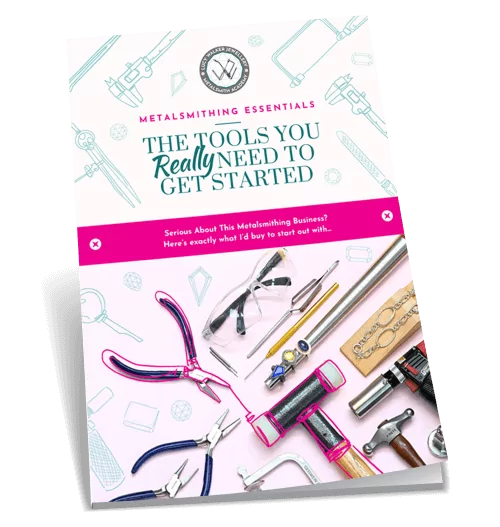
Get Started for free With Our Jewelry-Making Tools Ebook
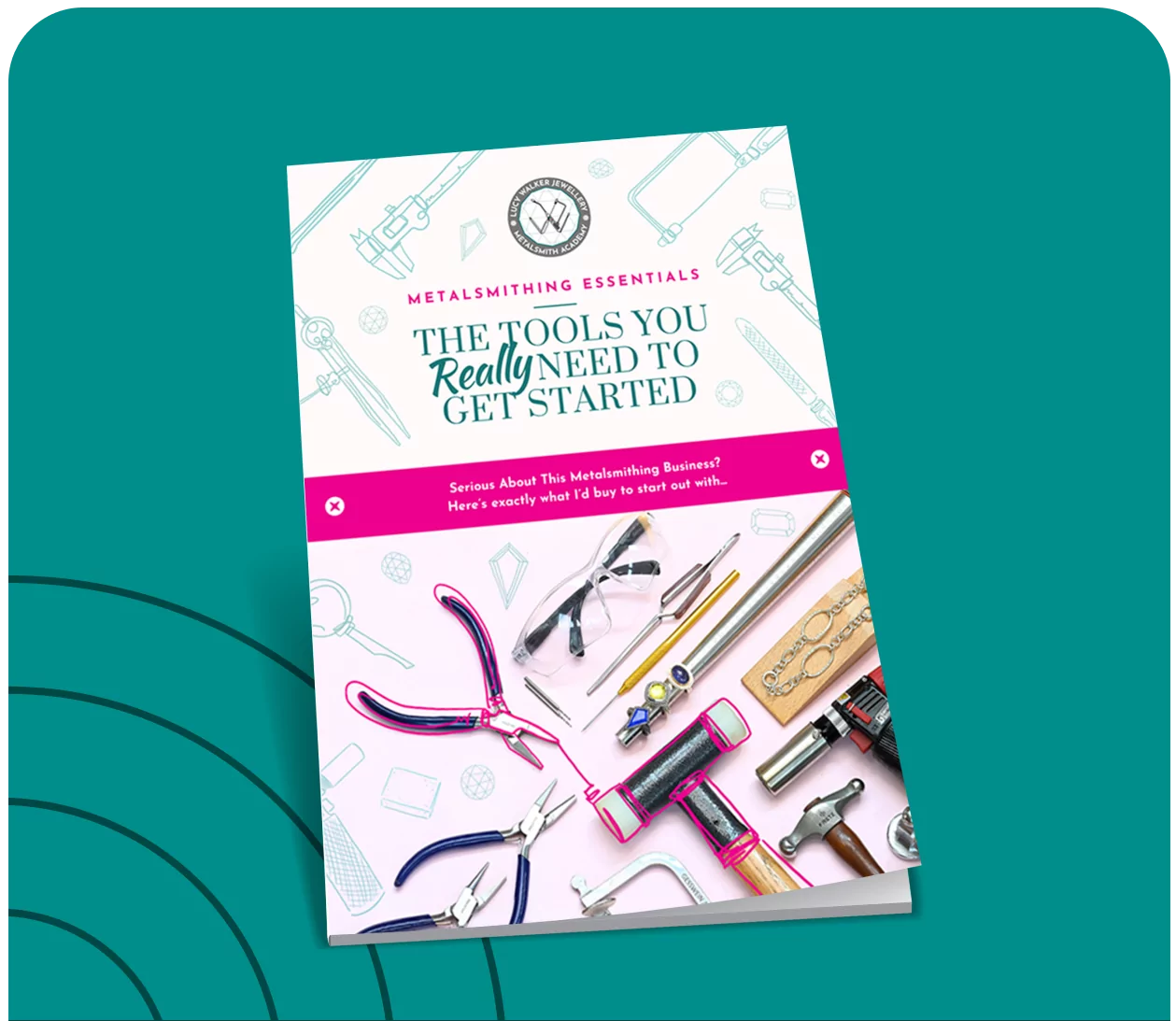
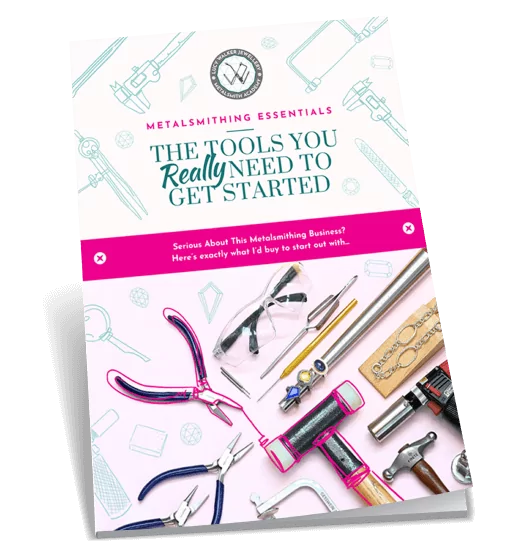
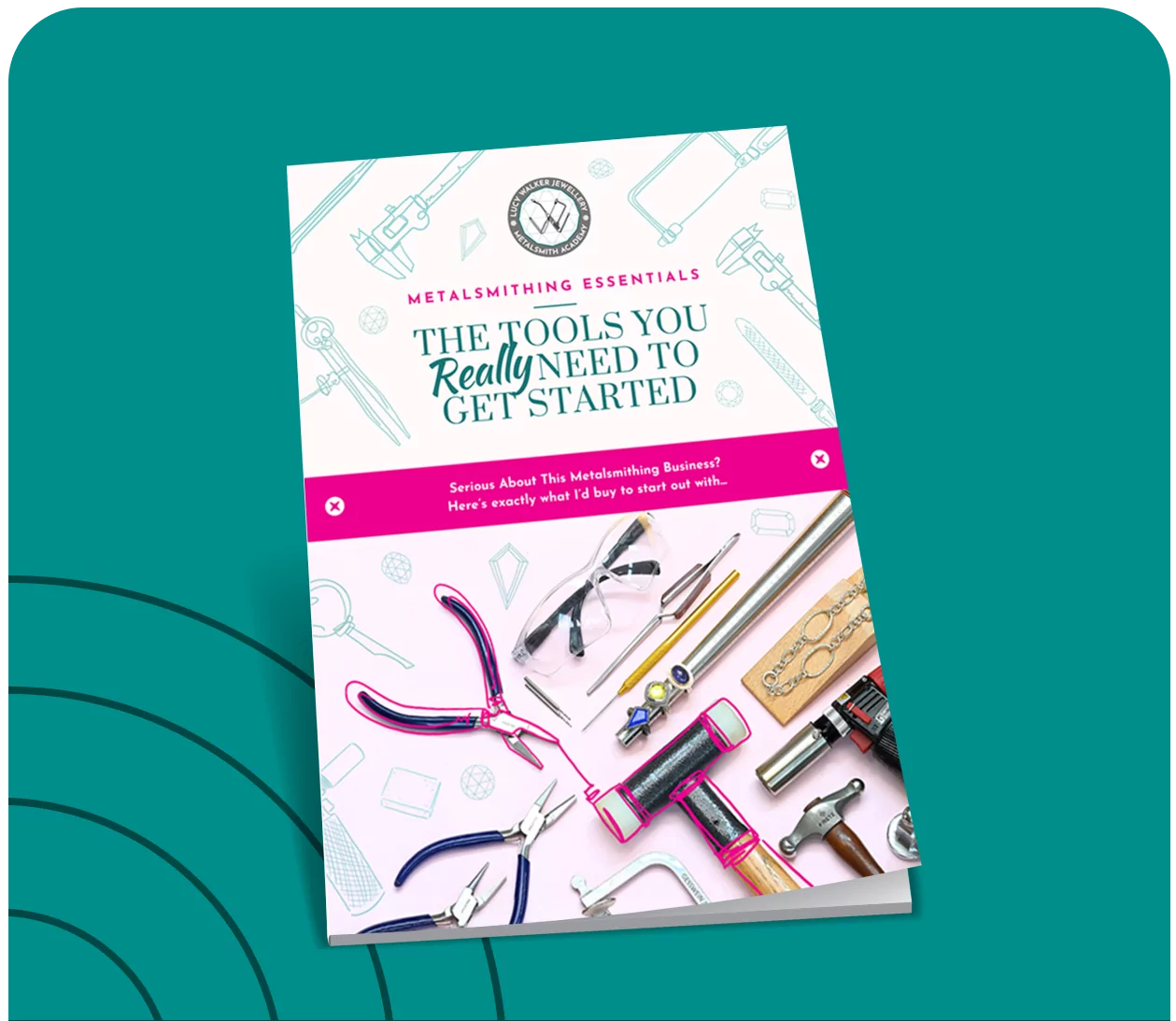
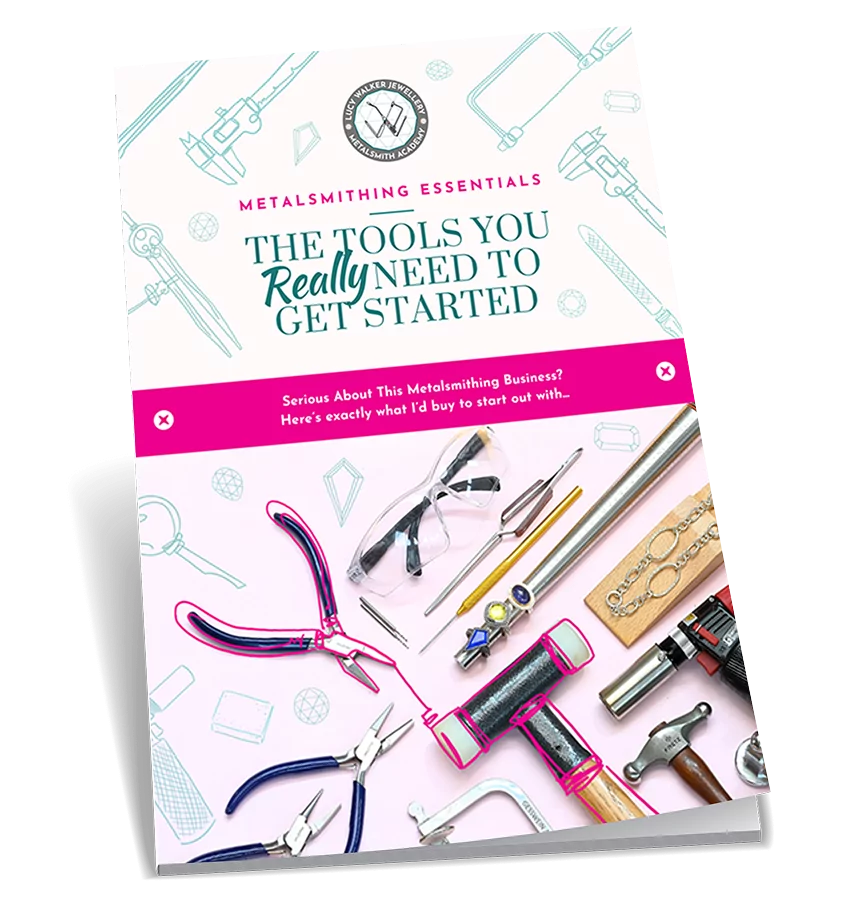
New to the metalsmithing malarkey and wondering what tools you really need to spend your hard-earned money on?! Where to splurge, and where to save (money, time and sanity?) Download our highly-popular eBook and start creating your jewelry-making obsession collection today!
Privacy Policy
Last Updated: 1 March 2021
Lucy Walker Jewelry PLT (“LWJ” and any reference to “we”, “us” or “our” shall mean LWJ) respects and is committed to the protection of your personal data and your privacy. This Personal Data Protection Notice (“Privacy Notice”) explains how LWJ collects and handles your personal data in accordance with the Personal Data Protection Act 2010 of Malaysia and other applicable privacy laws we are to adhere to. Please note that LWJ may amend this Privacy Notice at any time without prior notice and will notify you of any such amendment via our website or by such other means of communication as deemed suitable by LWJ.
1. Personal Data
1.1 Type of personal data
Personal data means any information which relates to you or in respect of a third party and which was collected or provided to LWJ for any of the purposes stated in Section 2 below (“Purposes”).
Your personal data may include, but is not limited to, your name, address, email address, contact information and IP address.
1.2 Source of personal data
LWJ collects your personal data whether directly from you or indirectly from third parties such as your third party representatives in connection with any submission, transaction, arrangements and/or enquiries made with LWJ including when you send us enquiries, register for an account on our website, purchase products or memberships from us, or join our online competitions and contests.
1.3 Obligatory personal data
All information requested for in the relevant forms and documents is obligatory to be provided by you unless stated otherwise.
Should you fail to provide the obligatory information, we may be unable to process your request and/or provide you with relevant services and products.
2. Purposes of collecting and further processing (including disclosing) your personal data
Your personal data is collected and further processed by LWJ as required or permitted by law and to give effect to your requested commercial transaction, including the following (Purposes):
(a) to assess and process your request for our products and services;
(b) to administer and give effect to your commercial transaction
(c) to facilitate your participation in, and our administration of, any events including contests, promotions or campaigns;
(d) to administer and communicate with you in relation to our products, services, promotions and/or events;
(e) to process any payments related to products and services requested by you;
(f) for internal investigations, compliance, audit or security purposes including without limitation for crime detection, prevention and prosecution;
(g) to conduct research for internal marketing analysis and analysis of customer patterns and choices;
(h) to better manage our business and your relationship with LWJ;
(i) to respond to your enquiries and to resolve any issues and disputes which may arise in connection with any dealings with LWJ;
(j) to comply with LWJ’s legal and regulatory obligations in the conduct of its business including to meet any disclosure requirements of any law binding upon LWJ;
(k) to contact you and/or provide you with information regarding products, services, upcoming events, promotions, advertising, marketing and commercial materials which may be of interest to you;
(l) to ensure that the content from our website is presented in the most effective manner for you and for your computer and/or device;
(m) for LWJ’s internal records management; or
(n) for any other purpose that is required or permitted by any laws, regulations, guidelines including the requirements of any governmental or regulatory authorities.
Where you have indicated your consent to receiving marketing or promotional updates from LWJ, you may opt-out from receiving such marketing or promotional material at any time. You may select the “unsubscribe” option provided in our email blasts or you may contact LWJ at the contact details provided in Section (6) below.
3. Disclosure or transfer of personal data (within or outside of Malaysia)
Classes of third parties
Your personal data may be disclosed or transferred to relevant third parties (within or outside of Malaysia) as required under law, pursuant to relevant contractual relationship (for example, our third party service providers) or for the Purposes (or directly related to Purposes).
Your personal data may be disclosed to the following classes of third parties:
Third parties appointed by us to provide services to us or on our behalf (such as banks or financial institutions, auditors, lawyers, company secretary, information technology (IT) system / software vendors, contractors, marketing consultants and other advisers);
Any financial institutions, merchants, credit card associations, or payment gateways in connection with your use of any credit or debit card in any transactions made with us;
Law enforcement agencies including courts, tribunals or authorities, whether governmental or quasi-governmental having jurisdiction over LWJ;
Relevant governmental agencies, statutory authorities, industry regulators and local councils; and
Any persons, authorities or regulators to whom LWJ is permitted or required to disclose to under the laws of any country.
4. Websites
4.1 Links to other sites
Content in any website run by LWJ (“LWJ Websites”) may include links to third party websites. LWJ is not responsible for the content on such linked third party websites and users should observe the separate privacy policies applicable to the respective third parties website.
4.2 Cookies
LWJ may collect information about your visits to the LWJ Websites without you actively submitting such information. Unidentifiable information may be collected using various technologies, such as cookies, and web beacons. Cookies are small text files that are transferred to your computer’s hard disk by a website. Web beacons (also referred to as GIF files, pixels or Internet tags) help LWJ recognise a unique cookie on your browser. Your internet browser automatically transmits to LWJ some of this unidentifiable information, such as the URL of the LWJ Website you just visited and the browser version your computer is operating.
Passive information collection technologies can make your use of the LWJ Websites easier by allowing LWJ to provide better service, customise the LWJ Websites based on consumer preferences, compile statistics, analyse trends, and otherwise administer and improve the LWJ Websites. Certain features of the LWJ Websites may not work without use of passive information collection technologies. Information collected by these technologies cannot be used to identify you without additional identifiable information and LWJ will not collect additional identifiable information with information collected through the use of such tracking technologies.
5. Right to access and correct personal data
You have the right to access and correct your personal data held by us (subject always to certain exceptions). We will make every endeavour to ensure your personal data is accurate and up to date therefore we ask that if there are changes to your information you should notify us directly at the contact details set out in Item (6) below
6. Limiting the processing of personal data, further enquiries and complaints
If:
you would like to obtain further information on how to limit the processing of your personal data;
you have any further query; or
you would like to make a complaint in respect of your personal data,
you may contact :-
Designation : Business Director
Email Address : shaun@lucywalkerjewellery.com
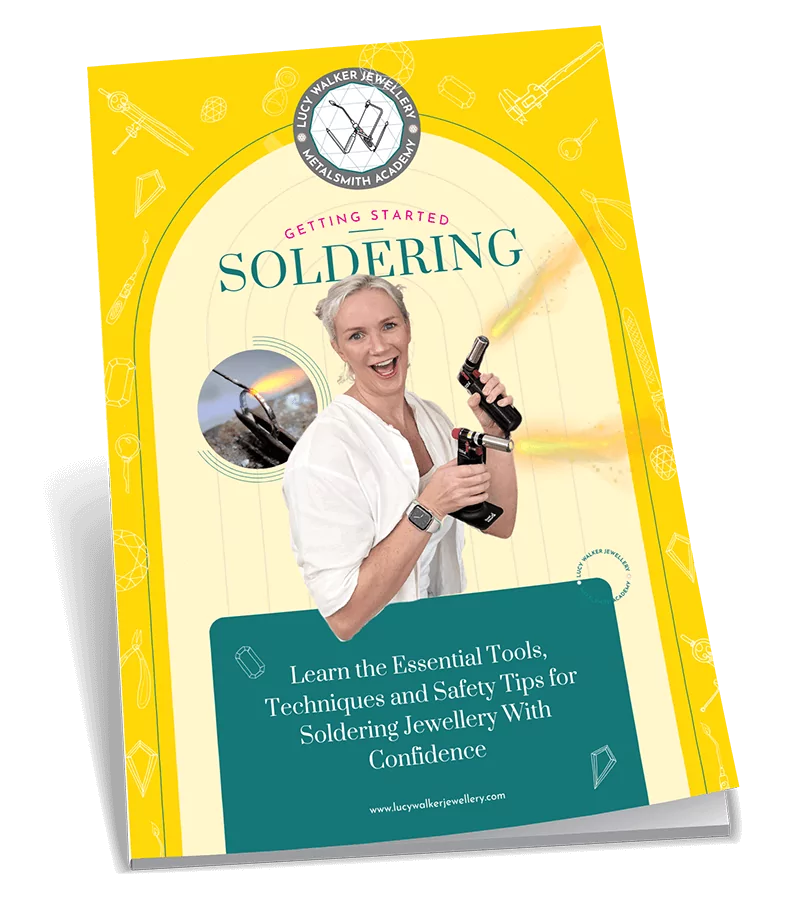
Download the Getting Started Soldering Guide now for FREE
Ready to overcome your flaming fears and master the #1 technique every metalsmith needs to create stunning jewelry? This outrageously comprehensive guide will give you the down-low on everything you need to know to start soldering with confidence!Ready to overcome your flaming fears and master the #1 technique every metalsmith needs to create stunning jewelry?
Just enter your details below and we’ll send it directly to your inbox.
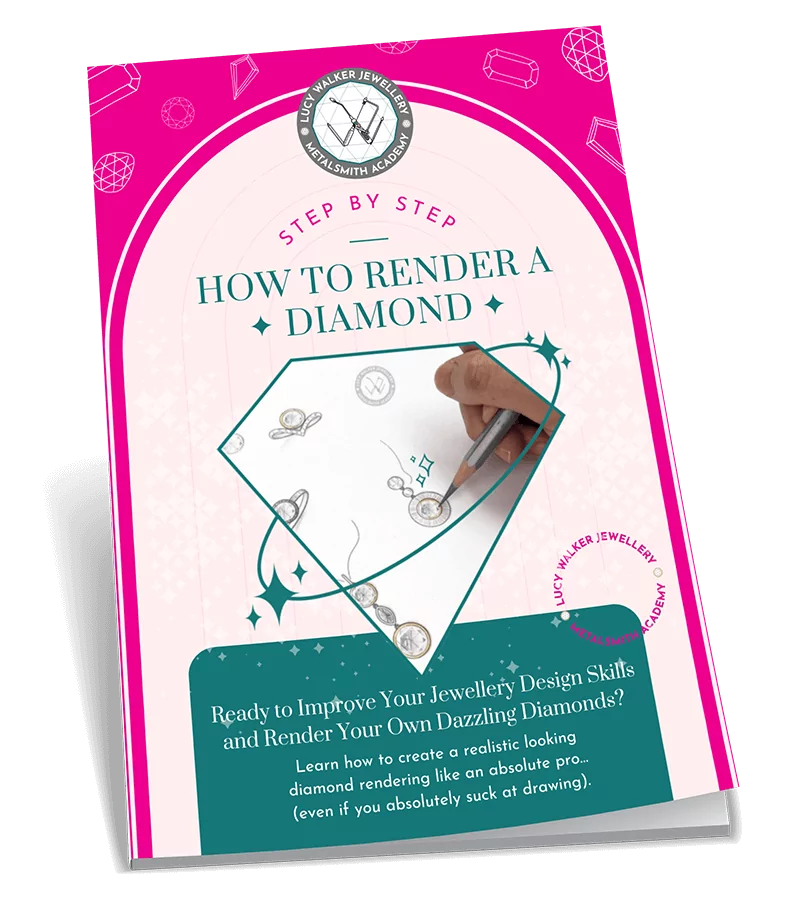
Download our Diamond Rendering Tutorial (PDF) now for FREE
Ready to learn the easier-than-you-think trick for rendering dazzling diamonds like a pro… even if drawing is soooo not your thing?! This handy PDF tutorial will be your sneaky shortcut to bring your diamond designs to life, without spending hours sketching.
Just enter your details below and we’ll send it directly to your inbox.

Download our $200 Jewelry-Making Tools List now for FREE
Ready to get the most bang for your buck and build your own beginner’s toolkit for less than $200? This 23-page guide will turn you into a smart and savvy jeweler, with all the tools you need to create elegant, high-quality, non-boring jewelry on a budget.
Just enter your details below and we’ll send it directly to your inbox.
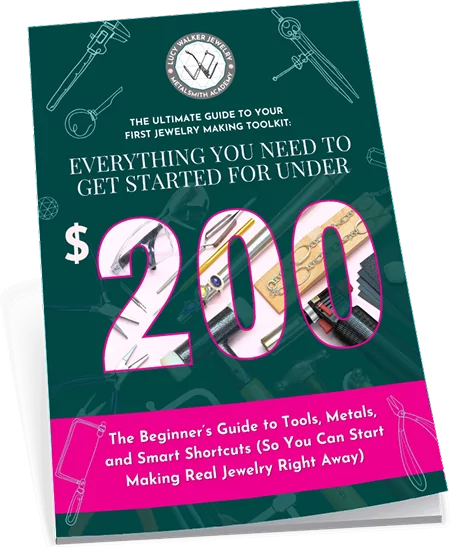
Download our $200 Jewelry-Making Tools List now for FREE
Ready to get the most bang for your buck and start making your own jewelry for less than $200?
Just enter your details below and we’ll send the free guide directly to your inbox.
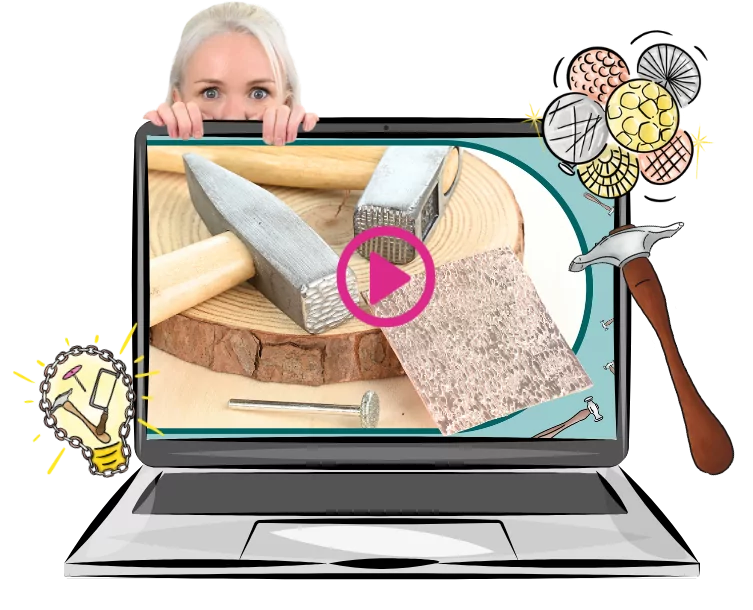
Turn a $4 Dud into a Texture Stud
In this fast and fun tutorial, you’ll learn how to transform a cheap-as-chips hammer into a seriously impressive texture tool - no fancy budget required.
Just enter your details below and we’ll send a link to watch directly to your inbox.
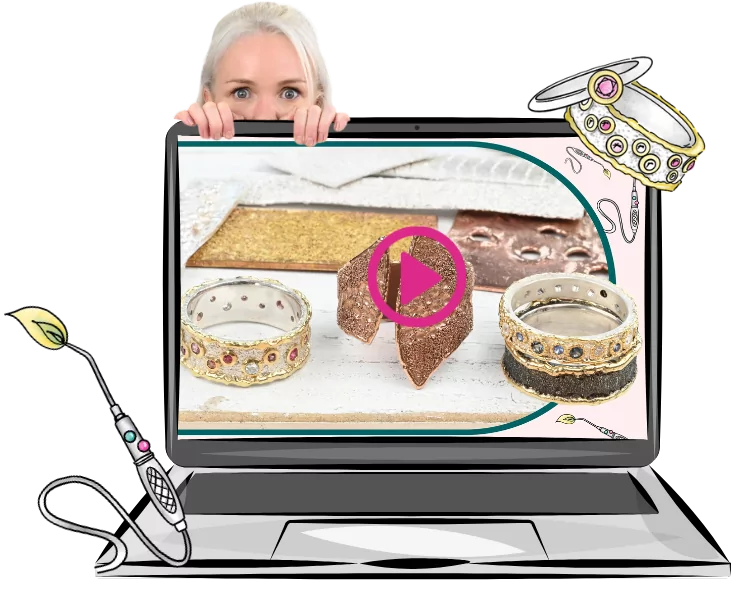
Love Playing With Fire? You’ll Love This.
In this free 20-minute video, you’ll learn how to turn metal dust into magic and master the art of wild, organic, melty textures - using nothing but a torch and a bit of control.
Just enter your details below and we’ll send a link to watch directly to your inbox.
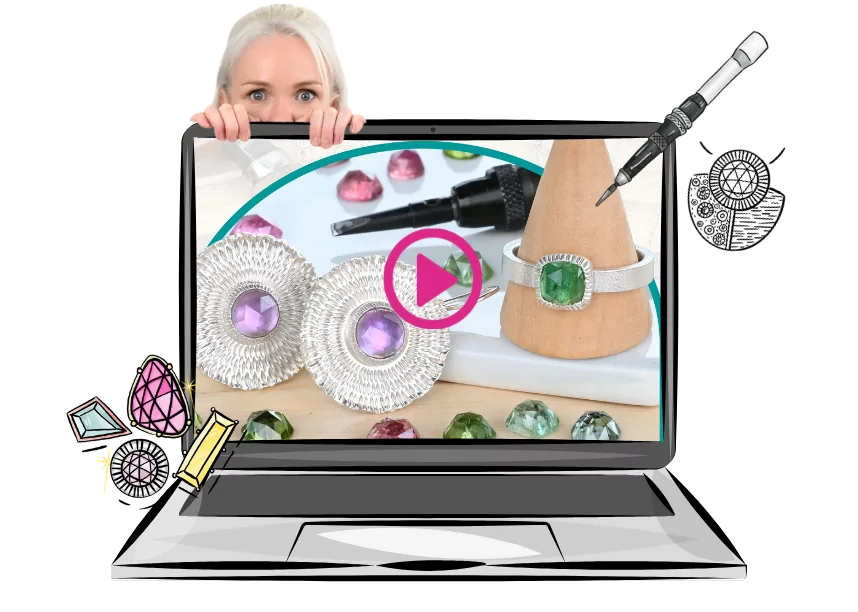
Learn How to Make Starburst Bezels (In Under 15 Minutes)
Ready to add some serious sparkle to your settings with this ridiculously satisfying technique? It’s quick, it’s fun, and these textured bezels are way easier to make than they look.
Just enter your details below and we’ll send a link to watch directly to your inbox.
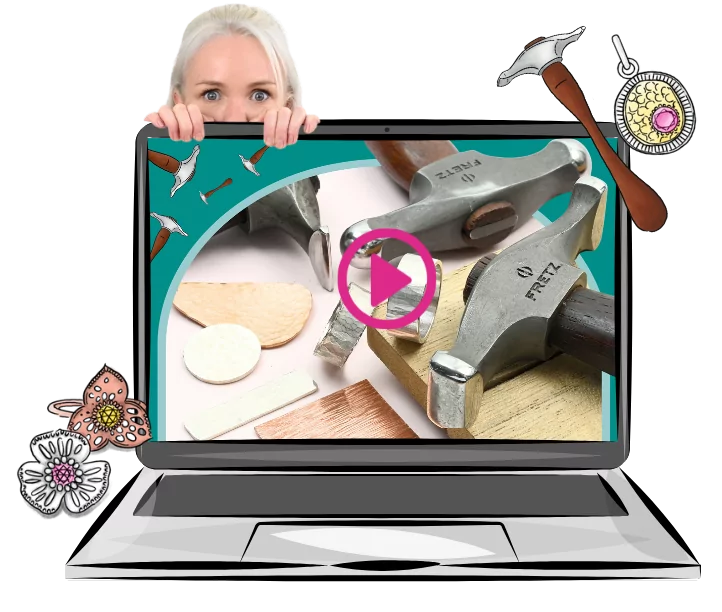
Unlock the Secrets to Gorgeous Hammer Textures
There’s a right way to whack metal - and this free 18-minute video shows you how. Say goodbye to messy textures and hello to finishes that actually look intentional (and professional).
Just enter your details below and we’ll send a link to watch directly to your inbox.
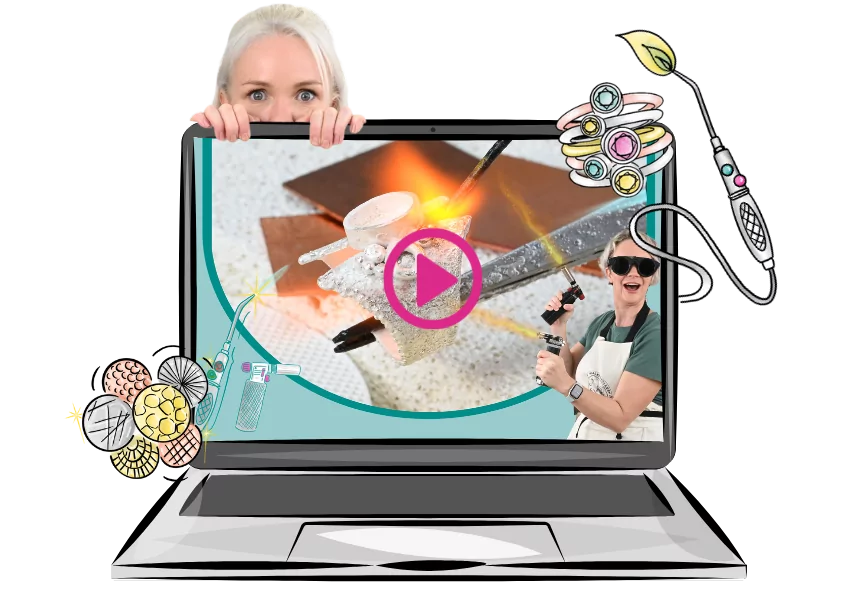
Struggling With Soldering? Start Here.
There’s a right way to whack metal - and this free 18-minute video shows you how. Say goodbye to messy textures and hello to finishes that actually look intentional (and professional).
Just enter your details below and we’ll send a link to watch directly to your inbox.
Download our FREE Jewelry-Making Tools eBook Now
Ready to build your must-have metalsmithing toolkit? Despite popular belief, you don't need all the tools to get started - or much at all! This eBook will take the guesswork out of your tool-buying and show you what you actually need (and what you can avoid wasting your coins on).
Just enter your details below and we’ll send it directly to your inbox.
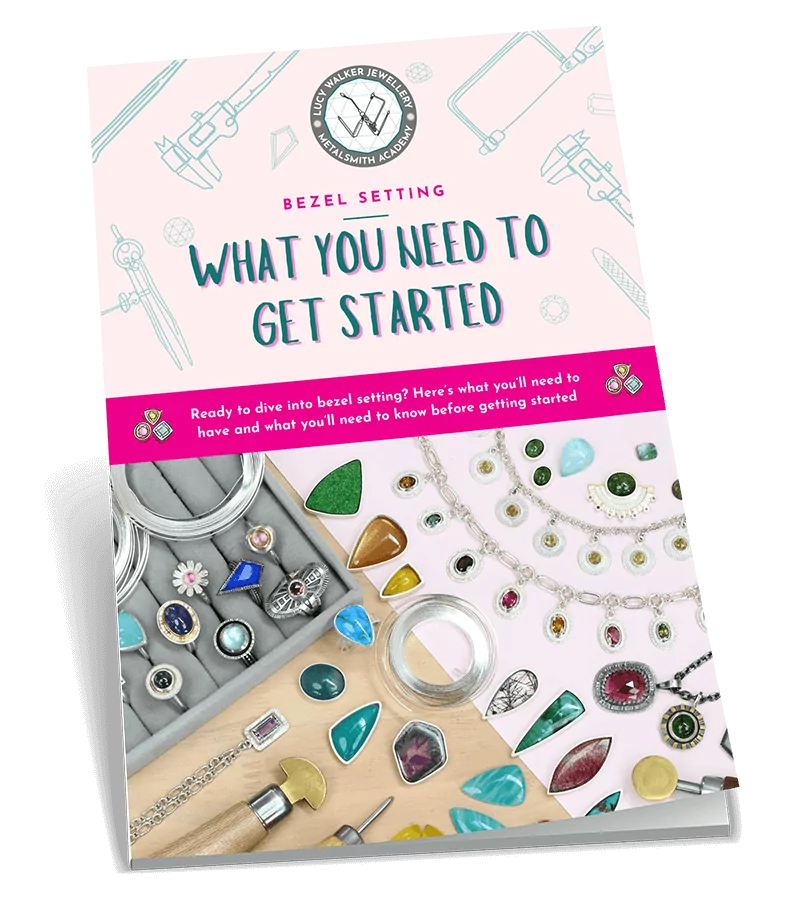
Download Our Beginners Guide to Bezel Setting now for FREE
Ready to learn all about bezel setting, so you can start putting your stash of gemstones to use? This guide is the perfect place to start.
Just enter your details below and we’ll send it directly to your inbox.
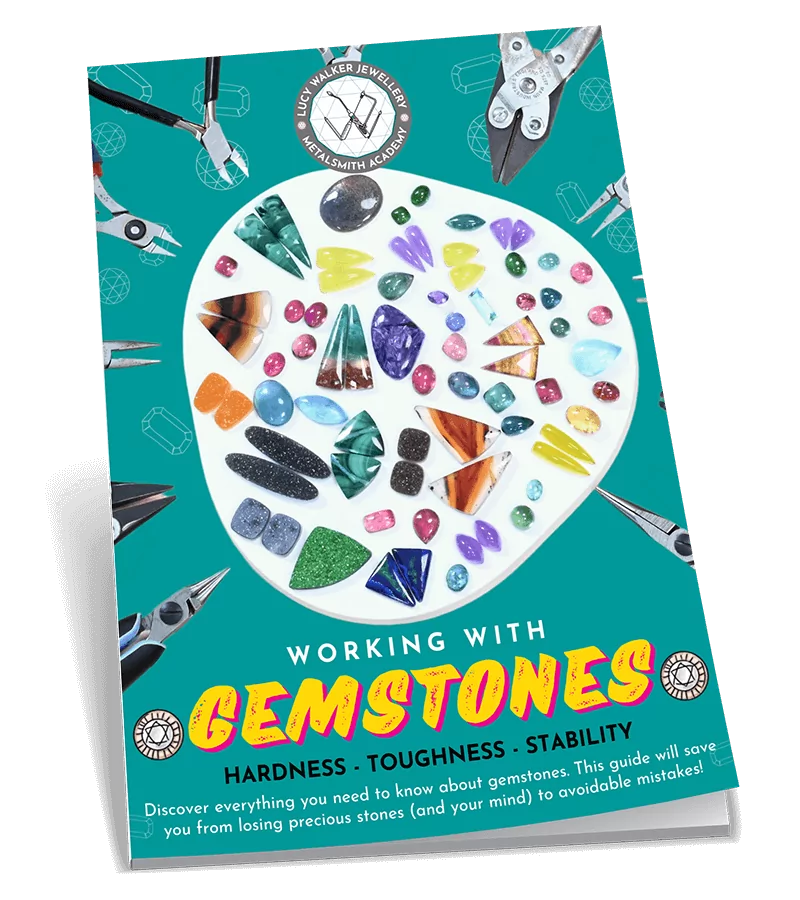
Download Our FREE Guide to Working With Gemstones now
Ready to officially become a Gemstone Guru and discover what you really need to know about choosing and using stones in your jewelry? This 31-page guide will help you select the right gemstones for your projects, and help you avoid buying gems that will cause you drama later on.
Just enter your details below and we’ll send it directly to your inbox.
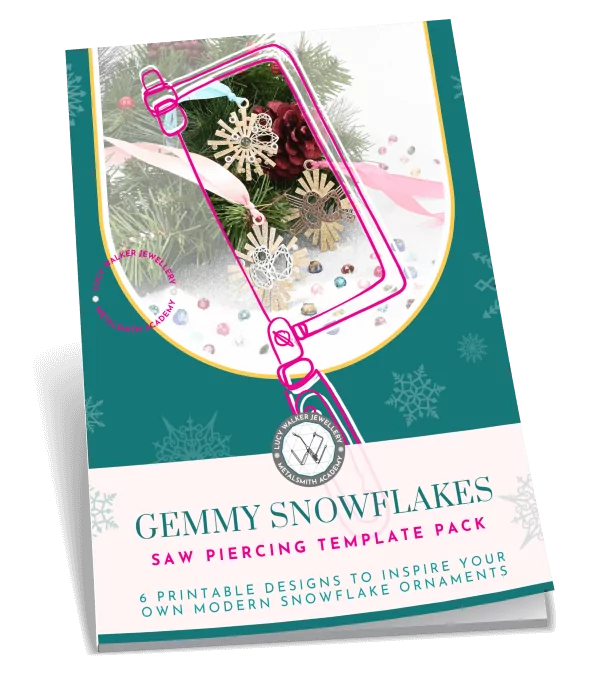
Download Our “Gemmy Christmas” Saw Pierced Template Pack Now for FREE
Ready to deck the halls with your own handmade and irresistibly festive Christmas ornaments? These 8 ready-to-use saw piercing templates are inspired by festive snowflakes and the shapes of your favorite gems! Just print them, stick them, and get saw piercing.
Just enter your details below and we’ll send it directly to your inbox.
Download our FREE Jewelry Design eBook: Finding Inspiration From Anywhere
Ready to train your creative muscles to glean inspiration from (literally) anywhere, and design more creative jewelry? Learn our favorite method to find inspiration, elevate your designs, and create one-of-a-kind pieces that stand out from the crowd.
Just enter your details below and we’ll send it directly to your inbox.
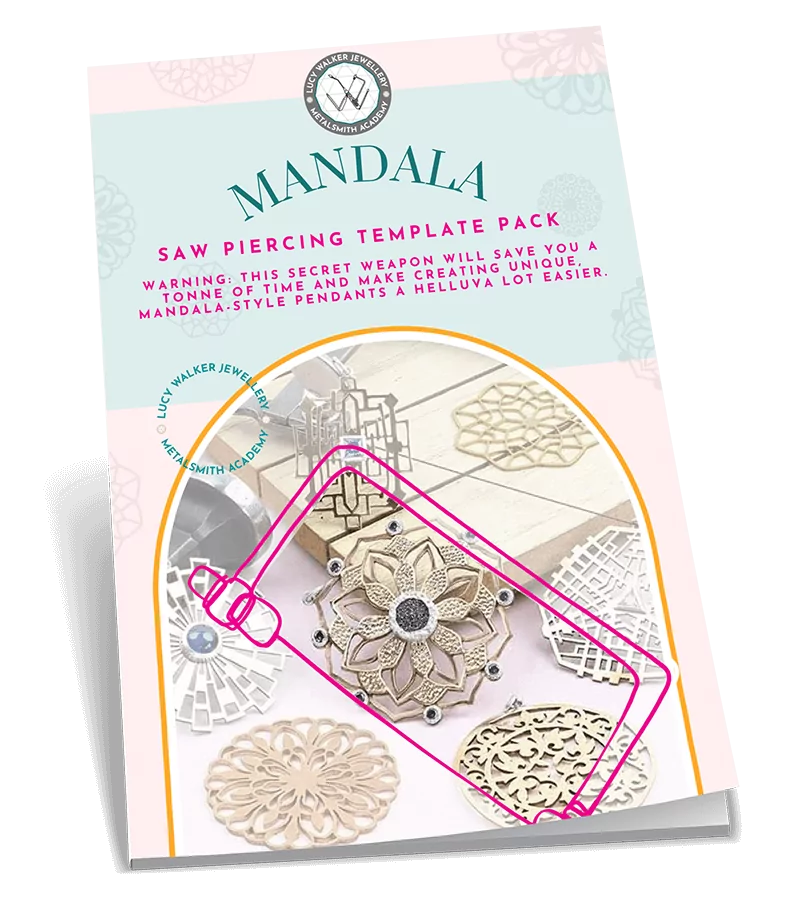
Swipe This Mandala Saw Piercing Template Pack Now for FREE
Warning: this secret weapon will save you a ton of time and make creating unique, mandala-style pendants a helluva lot easier. Skip the drawing and design phase, and simply download our designs, print them out, and pick up your saw frame to get creating!
Just enter your details below and we’ll send it directly to your inbox.
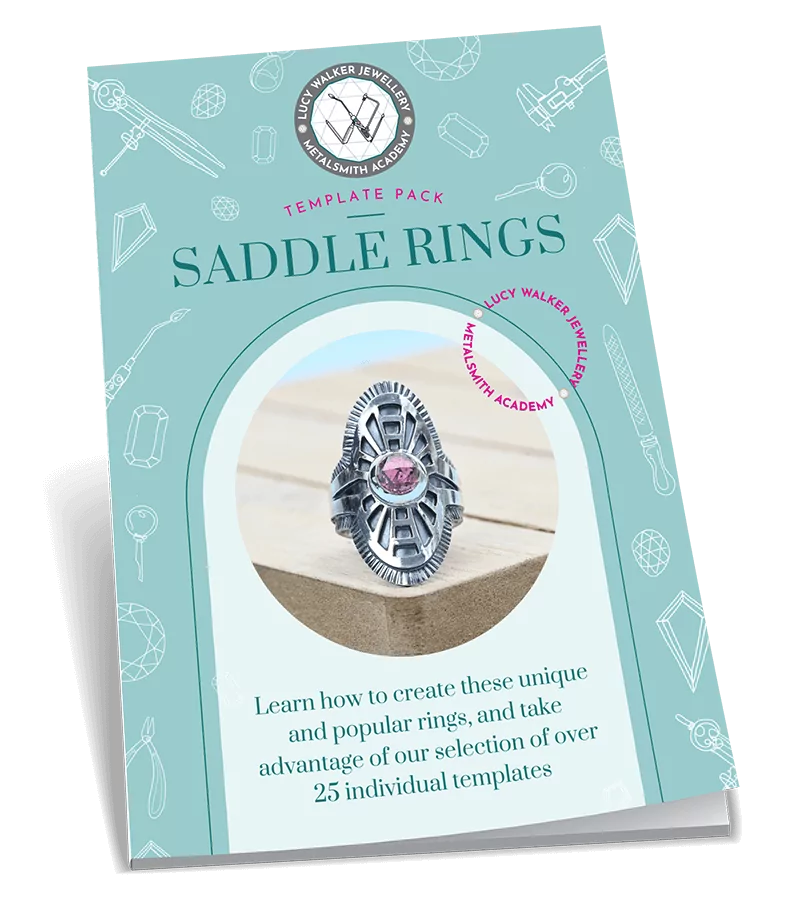
Download Our Pack of 27 Saddle Ring Templates Now for FREE
Ready to ditch the creative block, and get down to business creating your own beautiful, unique, and highly saleable saddle rings? These 27 design templates will get you creating stunning jewelry sooner! Plus, with 13 pages of step-by-step instructions on how to make your rings, you’ll be seriously set-up for success!
Just enter your details below and we’ll send it directly to your inbox.
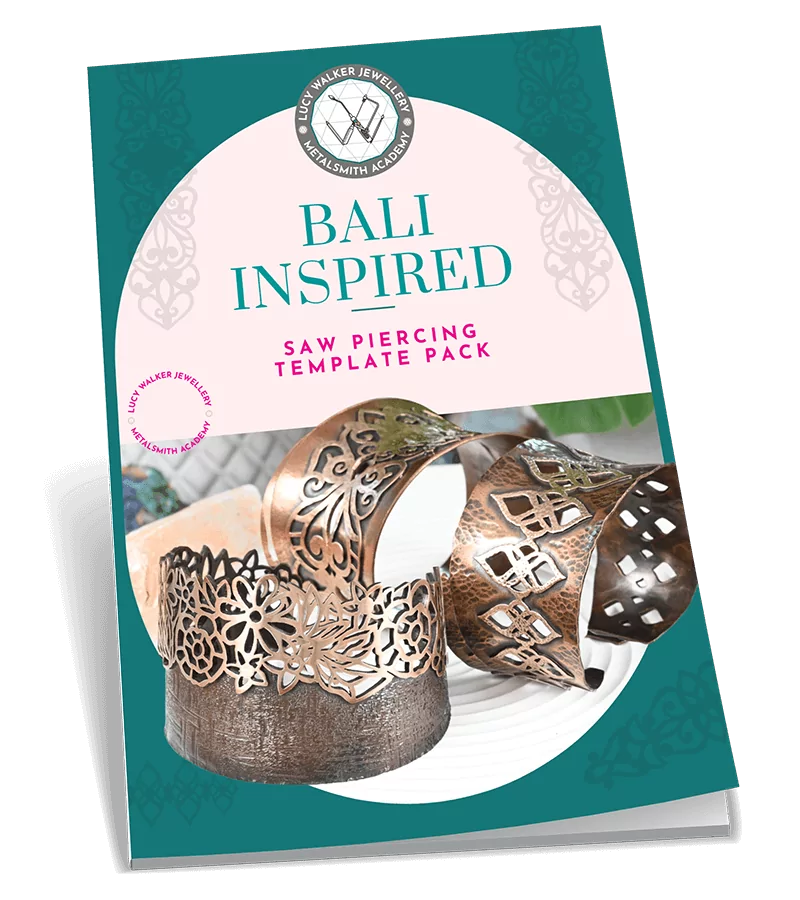
Download this Bali-Inspired Bangle Template Pack now for FREE
Swipe our printable Bali-inspired designs and add a touch of island paradise to your jewelry pieces! With 7 printable designs to choose from, you can skip the design phase, and simply print, trace, and get saw piercing.
Just enter your details below and we’ll send it directly to your inbox.
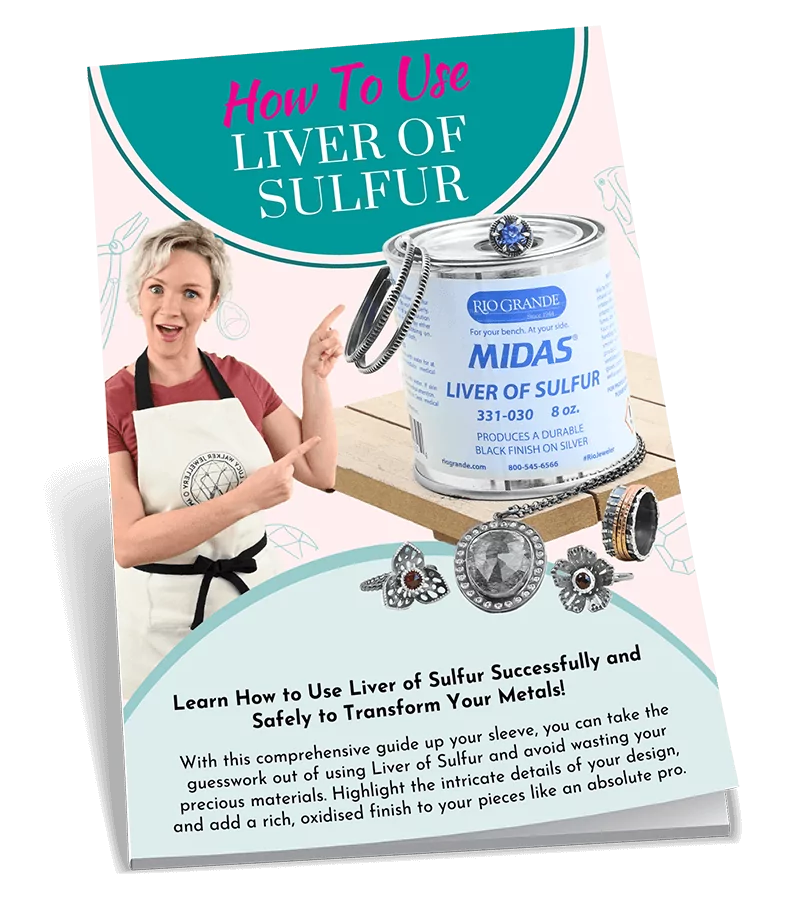
Download Our Simple, One-Stop Guide to Liver of Sulfur for FREE
Ready to learn how to give your metal jewelry a one-of-a-kind look with Liver of Sulfur? With so much competing information online about using Liver of Sulfur, this guide will strip things back and give you what you actually need to know. You’ll be ready to give this stinky substance a go in no time!
Just enter your details below and we’ll send it directly to your inbox.
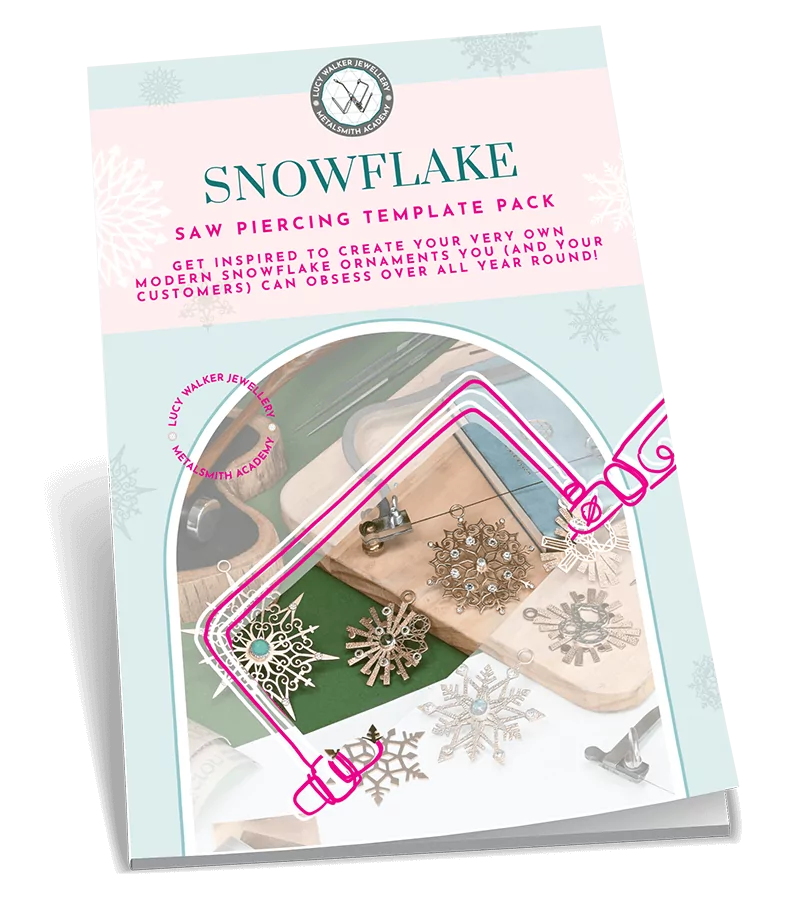
Download the Saw Pierced Snowflake Template Pack now for FREE
Get inspired to create your very own modern snowflake ornaments you (and your customers) can obsess over all year round! Avoid the creative block of designing your own, and instead steal these handy printable templates to make your saw piercing a dream.
Just enter your details below and we’ll send it directly to your inbox.
Sign up Now for Your Free Access to our Metalsmith Academy Membership Portal
Just pop your name and email below, and we’ll send through your free login details straight to your inbox.
Sign-up for Our Newsletter and Get Jewelry-Making Goodness Landing in Your Inbox Every Week
You’ll never be short of inspiration again with this newsletter in your life. Just enter your email below, and we’ll send you through all the non-annoying tips, sales, blog posts, and other jewelry-making malarkey you can dream of. Say hello to your new favorite weekly read!
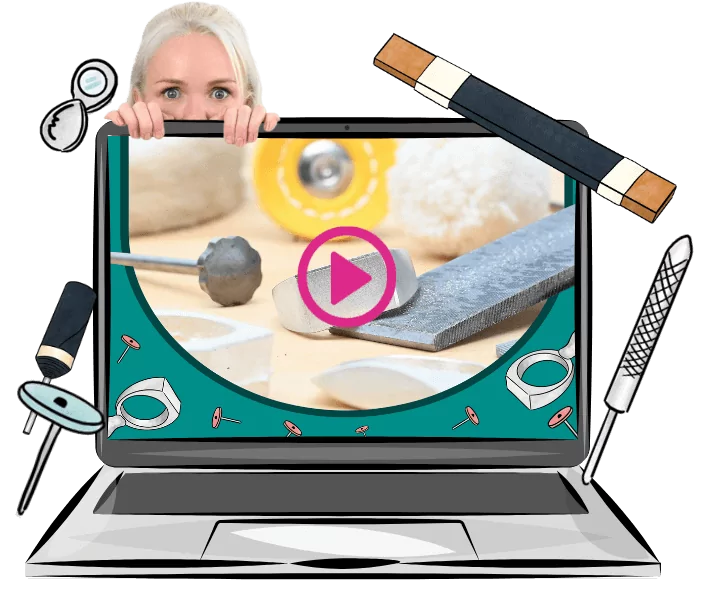
Master the Art of Polishing Sand Cast Rings
Learn how to clean up and polish your rings to a pro-level finish - even with all that pesky porosity. This 35-minute step-by-step video shows you exactly how it’s done.
Enter your details below and we’ll send a link to watch directly to your inbox.
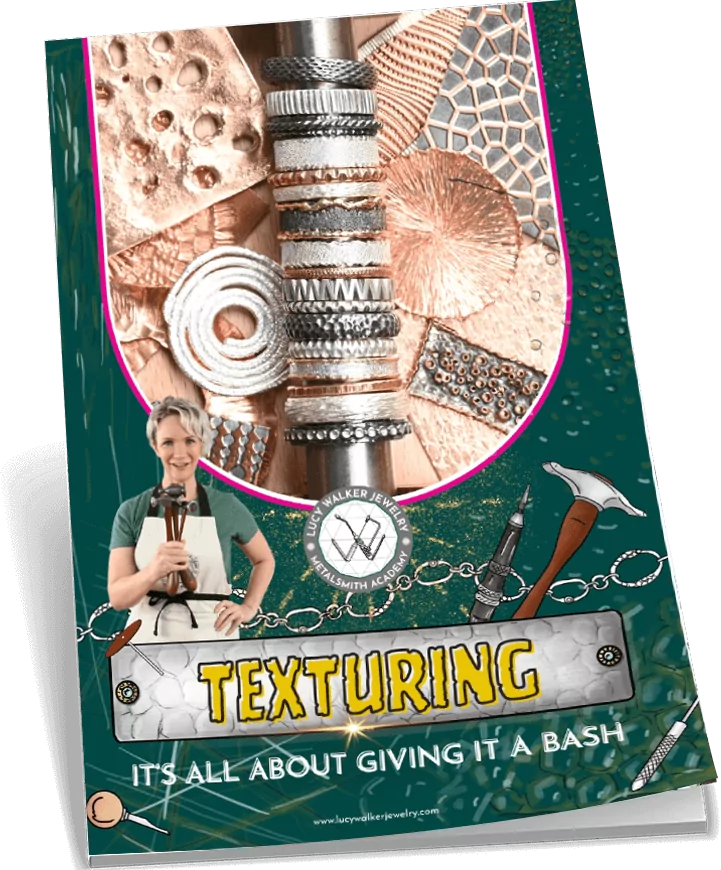
Download the FREE Jewelry Texturing Guide
Get inspired with 40+ texture ideas, techniques, and design inspirations! Enjoy pages of real samples, close-up photos and finished jewelry pieces to get your creative juices flowing.
Just enter your details below and we'll send a link directly to your inbox.